
Getting Started
Requires Grades 9-12th Level Membership
Taught from a college-level, secular perspective, this course prepares students to engage with real science the way professional astronomers do.
Students will explore planets, stars, black holes, galaxies, and more through interactive labs, stargazing, real science projects, and weekly assignments that spark curiosity and build confidence.
Whether your student dreams of becoming a scientist or just loves looking at the night sky, this course is designed to ignite their passion for space and help them think like a real astronomer.
Each week, students will have a lesson with a teacher (watch live or recorded), build hands-on projects, and complete homework assignments. It's important that students complete each set of projects and assignments, as weeks will build on each other in complexity and content.
Near the end of the term, students will complete their capstone project. Students will have the opportunity to participate in scientific research that contributes to the real astronomical community—by measuring stars and submitting their findings for publication in a scientific journal.

How to Succeed in this Course
This is a true college-level astronomy course. That means we’ll be moving at the same pace, covering the same topics, and holding you to the same standards of work as you’d find in a university class. The material will challenge you, and success will require focus, persistence, and consistent effort.
But don’t worry—you won’t be left to figure it out on your own. We’ll walk you through the lessons step by step, provide guidance on assignments, and give you the support you need to succeed. What we can’t do, however, is do the work for you. To get the most out of this course, you’ll need to show up prepared, participate fully, and commit to completing each assignment and project on time.
If you put in the effort, you’ll not only build a strong foundation in astronomy, but you’ll also experience the excitement of doing real science—discovering, questioning, and thinking like a professional astronomer.
Special Concern: How Can Faith-Based Homeschool Students Succeed in Secular College Science Courses?
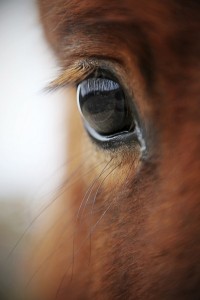
How does the eye work? If you are amazed as I am about how the different parts of the eye are put together, then this is the lab for you! It's important not only to learn how to take apart video cameras and blenders to find out how they work, but also to be fascinated by how the different parts of living creatures work ... like the eye!
In today’s dissection, we’ll be looking at a cow eye. Because cow eyes are so similar to humans eyes, you’ll learn a lot about your own eyes by dissecting the cow eye. Eyes are a very special organ that form images from the world around you and then send the images to your brain for processing. You will be able to see the cornea, iris, pupil, connecting muscles and veins, and other features.
Materials:
Please login or register to read the rest of this content.
Click here to go to part:28 Finale!
Dissection in biology provides a hands-on education above and beyond reading a textbook. By seeing, touching and exploring different organs, muscles and tissues inside an animal and seeing how they work together allows you to really understand your own body and appreciate the amazing world around us. And it's not hard - you can dissect a kidney right at home using an inexpensive specimen with a dissection guide and simple dissection tools! Many doctors, surgeons and veterinarians report that their first fascination with the body started with a biology dissection class.
In today’s dissection, we’ll be looking at a kidney. Kidneys are critical for removing toxic waste and regulating the levels of water, sugars, salts, and acids in the bodies of mammals. There are many things that make a kidney interesting, including its unique bean shape and the fact that it contains about a million microscopic structures called nephrons that are key in the blood filtration process.
Materials:
Please login or register to read the rest of this content.
Click here to go to part 27:Cow Eye Dissection
Dissection in biology provides a hands-on education above and beyond reading a textbook. By seeing, touching and exploring different organs, muscles and tissues inside an animal and seeing how they work together allows you to really understand your own body and appreciate the amazing world around us. And it's not hard - you can dissect a sheep brain right at home using an inexpensive specimen with a dissection guide and simple dissection tools! Many doctors, surgeons and veterinarians report that their first fascination with the body started with a biology dissection class.
In today’s dissection, we’ll be looking at a sheep brain. Brains, while still not entirely understood by biologists or psychologists, are critical for movement, respiration, thought, memory, processing sensory signals, and more. What we talk about in today’s dissection just scratches the surface of all there is to know about the brain, which is the most complex organ in the human body.
Materials:
Please login or register to read the rest of this content.
Click here to go to part:26 Sheep Kidney Dissection
Dissection in biology provides a hands-on education above and beyond reading a textbook. By seeing, touching and exploring different organs, muscles and tissues inside an animal and seeing how they work together allows you to really understand your own body and appreciate the amazing world around us. And it's not hard - you can dissect a heart right at home using an inexpensive specimen with a dissection guide and simple dissection tools! Many doctors, surgeons and veterinarians report that their first fascination with the body started with a biology dissection class.
In today’s dissection, we’ll be looking at a sheep heart. Like humans, sheep have four-chambered hearts. Hearts are an essential organ--they pump blood through your body to keep you alive!
Materials:
Please login or register to read the rest of this content.
Click here to go to part:25 Sheep Brain Dissection
In today’s dissection, we’ll be looking at an owl pellet. Owls are carnivores, and they eat things like moles, shrews, rodents, birds, insects, and even crayfish. Owls are unable to digest the bones and fur of these creatures, so they regurgitate (or spit up) what are called pellets--small bundles of all the indigestible parts of the owl’s prey.
Owl pellet dissection is an easy, hands-on way to learn about the eating habits of birds of prey. (Owl pellets are the regurgitated remains of an owl's meal.) But don't be grossed out - finding and piecing together the bones inside owl pellets is fascinating work for a young scientist such as yourself! As you dissect the pellet, you'll find skeletons of mice, voles, birds, and more. Synthetic pellets are available for younger children if you'd like to use a substitute.
Dissection in biology provides a hands-on education above and beyond reading a textbook. By seeing, touching and exploring different organs, muscles and tissues inside an animal and seeing how they work together allows you to really understand your own body and appreciate the amazing world around us. And it's not hard - you can dissect a pellet right at home using an inexpensive specimen with a dissection guide and simple dissection tools! Many doctors, surgeons and veterinarians report that their first fascination with the body started with a biology dissection class.
Materials:
Please login or register to read the rest of this content.
Click here to go to part:24 Sheep Heart Dissection
Dissection in biology provides a hands-on education above and beyond reading a textbook. By seeing, touching and exploring different organs, muscles and tissues inside an animal and seeing how they work together allows you to really understand your own body and appreciate the amazing world around us. And it’s not hard – you can dissect a frog right at home using an inexpensive specimen with a dissection guide and simple dissection tools! Many doctors, surgeons and veterinarians report that their first fascination with the body started with a biology dissection class.
In today’s dissection, we’ll be looking at a frog. Frogs are members of the Class Amphibia. There are many things that make frogs interesting: they live both in water and on land, they actually begin life in water as limbless tadpoles, and some can change color depending on their environment.
Materials
- Frog (click if you need the whole frog kit, or here if you need only the frog)
- Dissection tools
- Dissection pins
- Dissection guide
Please login or register to read the rest of this content.
Click here to go to part:23 Owl Pellet Dissection
Dissection in biology provides a hands-on education above and beyond reading a textbook. By seeing, touching and exploring different organs, muscles and tissues inside an animal and seeing how they work together allows you to really understand your own body and appreciate the amazing world around us. And it’s not hard – you can dissect a crayfish right at home using an inexpensive specimen with a dissection guide and simple dissection tools! Many doctors, surgeons and veterinarians report that their first fascination with the body started with a biology dissection class.
In today’s dissection, we’ll be looking at a crayfish. Crayfish are members of the phylum Arthropoda. There are many things that make crayfish interesting: they dwell at the bottom of streams, rivers, and ponds; they feed on just about anything that comes their way (that’s why they’re called freshwater scavengers); and they have many appendages that help them save energy.
Materials
- Crayfish (click if you need the whole kit, or just the crayfish)
- Dissection tools
- Dissection guide
Please login or register to read the rest of this content.
Click here to go to part 22:Dissecting a Frog
Dissection in biology provides a hands-on education above and beyond reading a textbook. By seeing, touching and exploring different organs, muscles and tissues inside an animal and seeing how they work together allows you to really understand your own body and appreciate the amazing world around us. And it’s not hard – you can dissect a starfish right at home using an inexpensive specimen with a dissection guide and simple dissection tools! Many doctors, surgeons and veterinarians report that their first fascination with the body started with a biology dissection class.
In today’s dissection, we’ll be looking at a starfish. Starfish are members of the phylum Echinoderm. There are many things that make starfish interesting: their rays are symmetrical around their center (this is called radial symmetry), they use seawater instead of blood to transport nutrients through their bodies (this is called a water vascular system), and they move around using tube feet on the underside of their bodies.
Materials
- Starfish (click if you need the whole kit, or just the starfish)
- Dissection tools
- Dissection guide
Please login or register to read the rest of this content.
Click here to go to part:21 Dissecting a Crayfish
Dissection in biology provides a hands-on education above and beyond reading a textbook. By seeing, touching and exploring different organs, muscles and tissues inside an animal and seeing how they work together allows you to really understand your own body and appreciate the amazing world around us. And it's not hard - you can dissect a fish right at home using an inexpensive specimen with a dissection guide and simple dissection tools! Many doctors, surgeons and veterinarians report that their first fascination with the body started with a biology dissection class
.
In today’s dissection, we’ll be looking at a perch. Perch are members of the phylum Chordata. There are many things that make perch interesting: they are bony fishes which make them “true” fishes, they live in both freshwater and saltwater, and their diets change based on how big they are.
Materials:
Please login or register to read the rest of this content.
Click here to go to part 20:Dissecting a Starfish
Dissection in biology provides a hands-on education above and beyond reading a textbook. By seeing, touching and exploring different organs, muscles and tissues inside an animal and seeing how they work together allows you to really understand your own body and appreciate the amazing world around us. And it's not hard - you can dissect a grasshopper right at home using this inexpensive specimen with a dissection guide and simple dissection tools! Many doctors, surgeons and veterinarians report that their first fascination with the body started with a biology dissection class.
Materials:
- Grasshopper (click if you need the whole kit or just the grasshopper)
- Dissection tools
- Dissection Guide
Please login or register to read the rest of this content.
Click here to go to part:19 Perch Dissection
Dissection in biology provides a hands-on education above and beyond reading a textbook. By seeing, touching and exploring different organs, muscles and tissues inside an animal and seeing how they work together allows you to really understand your own body and appreciate the amazing world around us. And it's not hard - you can dissect a worm right at home using an inexpensive specimen with a dissection guide and simple dissection tools! Many doctors, surgeons and veterinarians report that their first fascination with the body started with a biology dissection class
.
In today’s dissection, we’ll be looking at an earthworm. Earthworms play an important role in their ecosystem--when they tunnel through dirt they mix nutrients which helps make the soil healthy and able to support plant life.
Materials:
Please login or register to read the rest of this content.
Click here to go to part:18 Grasshopper Dissection
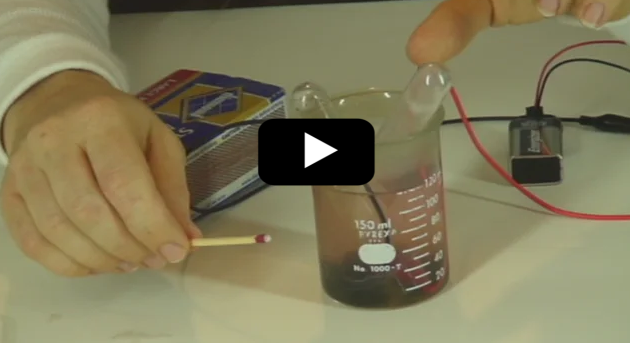
This experiment is just for advanced students. If you guessed that this has to do with electricity and chemistry, you’re right! But you might wonder how they work together. Back in 1800, William Nicholson and Johann Ritter were the first ones to split water into hydrogen and oxygen using electrolysis. (Soon afterward, Ritter went on to figure out electroplating.) They added energy in the form of an electric current into a cup of water and captured the bubbles forming into two separate cups, one for hydrogen and other for oxygen.
This experiment is not an easy one, so feel free to skip it if you need to. You don’t need to do this to get the concepts of this lesson but it’s such a neat and classical experiment (my students love it) so you can give it a try if you want to. The reason I like this is because what you are really doing in this experiment is ripping molecules apart and then later crashing them back together.
Have fun and please follow the directions carefully. This could be dangerous if you’re not careful. The image shown here is using graphite from two pencils sharpened on both ends, but the instructions below use wire. Feel free to try both to see which types of electrodes provide the best results.
Please login or register to read the rest of this content.
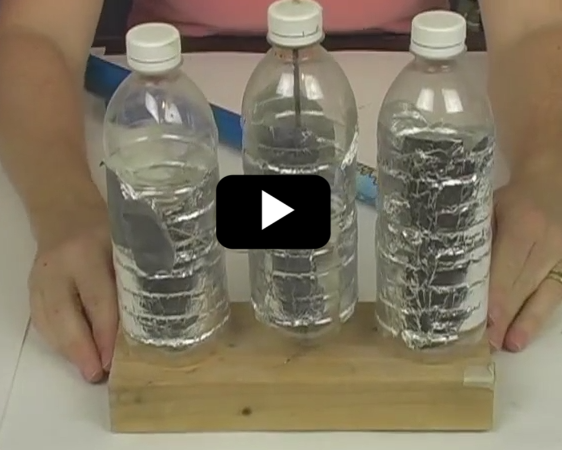
If you have a Fun Fly Stick, then pull it out and watch the video below. If not, don't worry - you can do most of these experiments with a charged balloon (one that you've rubbed on your hair). Let' play with a more static electricity experiments, including making things move, roll, spin, chime, light up, wiggle and more using static electricity!
Please login or register to read the rest of this content.
The shell of chicken eggs are made mostly of calcium carbonate (CaCO3), which which reacts with distilled white vinegar (try placing a raw egg in a glass of vinegar overnight). The shell has over 15,000 tiny little mores that allows air and moisture to pass through, and a protective outer coating to keep out harmful things like dust and bacteria.
We're going to peek inside of an egg and discover the transparent protein membrane (made of the same protein your hair is made up of: keratin) and also peek in the air space that forms when the egg cools and contracts (gets smaller). Can you find the albumen (the egg white)? It's made up of mostly water with about 40 different proteins.
Please login or register to read the rest of this content.
Download Egg Dissection Lab here for older grades (5-12th) and here for younger grades (K-4).
Click here to go to part 16:Clam Dissection
Going Further
We are all made of trillions of cells, and each cell as a job to do, like detecting light, sensing touch, carry oxygen, digest food… there are over 200 different jobs just in your own body alone for cells to do! DNA are the instructions that tell cells what their job is.
Find the full DNA experiment here.
Find the full DNA experiment here.
Click here to go to part 15:Dissecting a Chicken Egg
If you were an astrobiologist, you would be working with space scientists and marine biologists also, because you would need to understand how life works here on earth in extreme environments in order to help you understand what you find out there in space.
Click here to go to Part 12: Cells
Osmosis is how water moves through a membrane. A carrot is made up of cells surrounded by cell membranes. The cell membrane’s job is to keep the cell parts protected. Water can pass through the membrane, but most things can’t.
Find the full Carrot Osmosis experiment here.
Find the full Carrot Osmosis experiment here.
Click here to go to Part 14: DNA
Animals, plants and other living things look different, and contain many different kinds of cells, but when you get down to it, all of us are just a bunch of cells – and that makes cells pretty much the most important thing when it comes to life!
Ecology studies nature and how the whole ecosystem works. An ecosystem is a community of interacting living things in their environment.
Please login or register to read the rest of this content.
Please login or register to read the rest of this content.
Bioluminescence is when a living organism produces (and emits) light. It's a form of chemiluminescence, and it's everywhere in biology!
Find the full Cool Blue Light experiment here.
Find the full Cool Blue Light experiment here.
Click here to go to Part 10: Ecosystems
A virus is like when you catch a cold or the chicken pox – the virus uses the cells in your body to make copies of itself so it can spread throughout your body. Bacteria on the other hand, are living microorganisms, most of which don’t harm people at all (there are exceptions, like when they cause strep throat and tuberculosis).
Find the full Laser Microscope experiment here.
Click here to go to Part 9: Bioluminescence
Find the full Laser Microscope experiment here.There’s a special way scientists classify and name all living things – it’s called “taxonomy”. All living things are divided into the following groups, called kingdoms. All kingdoms are made up of smaller groups which are made of even smaller groups, and so on. A series of groups within one system is called a hierarchy. It’s how you find your serving spoon in a drawer with a million other silverware pieces – it makes it easy and fast to find out about what you want.
Click here to go to Part 8: Viruses & Bacteria
Here’s a neat experiment you can do to measure the rate of photosynthesis of a plant, and it’s super-simple and you probably have most of what you need to do it right now at home!
You basically take small bits of a leaf like spinach, stick it in a cup of water that has extra carbon dioxide in it, and shine a light on it. The plant will take the carbon dioxide from the water and the light from the lamp and make oxygen bubbles that stick to it and lift it to the surface of the water, like a kid holding a bunch of helium balloons. And you time how long this all takes and you have the rate of photosynthesis for your leaf.
You basically take small bits of a leaf like spinach, stick it in a cup of water that has extra carbon dioxide in it, and shine a light on it. The plant will take the carbon dioxide from the water and the light from the lamp and make oxygen bubbles that stick to it and lift it to the surface of the water, like a kid holding a bunch of helium balloons. And you time how long this all takes and you have the rate of photosynthesis for your leaf.
Click here to go to Part 7: Taxonomy
Acids are sour tasting (like a lemon), bases are bitter (like unsweetened cocoa powder). Substances in the middle are more neutral, like water. Scientists use the pH (power of hydrogen, or potential hydrogen) scale to measure how acidic or basic something is. Hydrochloric acid registers at a 1, sodium hydroxide (drain cleaner) is a 14. Water is about a 7. pH levels tell you how acidic or alkaline (basic) something is, like dirt. If your soil is too acidic, your plants won't attract enough hydrogen, and too alkaline attracts too many hydrogen ions. The right balance is usually somewhere in the middle (called 'pH neutral'). Some plants change color depending on the level of acidity in the soil - hydrangeas turn pink in acidic soil and blue in alkaline soil.
Some things you can test (in addition to the ones in the video) include: Sprite, distilled white vinegar, baking soda, Vanish, laundry detergent, clear ammonia, powdered Draino, and Milk of Magnesia. DO NOT mix any of these together! Simply add a bit to each cup and test it with your pH strips. Here's a quick video demonstration:
There are many different kinds of acids: citric acid (in a lemon), tartaric acid (in white wine), malic acid (in apples), acetic acid (in vinegar), and phosphoric acid (in cola drinks). The battery acid in your car is a particularly nasty acid called sulfuric acid that will eat through your skin and bones. Hydrochloric acid is found in your stomach to help digest food, and nitric acid is used to make dyes in fabrics as well as fertilizer compounds.
Some things you can test (in addition to the ones in the video) include: Sprite, distilled white vinegar, baking soda, Vanish, laundry detergent, clear ammonia, powdered Draino, and Milk of Magnesia. DO NOT mix any of these together! Simply add a bit to each cup and test it with your pH strips. Here's a quick video demonstration:
Click here to go to Part 6: Bonus Content: Measuring Photosynthesis
There are many different kinds of acids: citric acid (in a lemon), tartaric acid (in white wine), malic acid (in apples), acetic acid (in vinegar), and phosphoric acid (in cola drinks). The battery acid in your car is a particularly nasty acid called sulfuric acid that will eat through your skin and bones. Hydrochloric acid is found in your stomach to help digest food, and nitric acid is used to make dyes in fabrics as well as fertilizer compounds.
Plants have the ability to detect light, touch and different types of gases, and also record that information so it can recall it later!
Please login or register to read the rest of this content.
Please login or register to read the rest of this content.
Botany (plant biology) studies the nature of plants and their environment. Take a look at some of the things you get to study when you’re a botanist!
Please login or register to read the rest of this content.
Please login or register to read the rest of this content.
If you’ve ever watched a bird take off, you know it flaps its wings first, then somehow lifts itself off the ground. Some birds need to get a running start, and overs can just hover straight up. What about an airplane – how does an airplane take off? Does it need to flap its wings? Let's find out!
Please login or register to read the rest of this content.
Please login or register to read the rest of this content.
Click here to go to Part 5: Botany 1
You can learn more about airfoils here, and if you want to learn how to fly a real airplane, go here.
(Where's Part 1? You just watched it above in the "What is Biology" section!) Scientists don’t just classify things based on how they look. For example, alligators and crocodiles both look similar, and how they look actually depends on which part of the world they came from.
Please login or register to read the rest of this content.
Dissection in biology provides a hands-on education above and beyond reading a textbook. By seeing, touching and exploring different organs, muscles and tissues inside an animal and seeing how they work together allows you to really understand your own body and appreciate the amazing world around us. And it's not hard - you can dissect a clam right at home using this inexpensive clam specimen with a dissection guide and simple dissection tools! Many doctors, surgeons and veterinarians report that their first fascination with the body started with a biology dissection class.
Materials:
- Fresh clam (in shell)
- Dissection tools
- Clam diagrams
Please login or register to read the rest of this content.
Click here to go to part 17:Earthworm Dissection
Entomologists study insects, including what they look like and how they react and behave, and also the environment they like to live in.
Scientists don’t just classify things based on how they look. For example, alligators and crocodiles both look similar, and how they look actually depends on which part of the world they came from.
Content coming soon!
Please login or register to read the rest of this content.
Click here to go to next lesson on Redox reactions
Please login or register to read the rest of this content.
Click here to go to next lesson on Ksp Calculations and Solubility Product
Please login or register to read the rest of this content.
Click here to download Homework Problem Set #12
Please login or register to read the rest of this content.
Click here for the next lesson in Freezing Point Depression and Boiling Point Elevation.
Please login or register to read the rest of this content.
Click here for next lesson in Partial Pressures.
Let’s get more practice with Henry’s Law, partial pressures, mole fraction, and weight percent with these sample calculations:
Please login or register to read the rest of this content.
Click here for the next lesson in Colligative Properties Part 2.
Please login or register to read the rest of this content.
Click here for Homework Problem Set #8.
Osmosis is how cells allow water to pass through in and out of the cell through a special membrane using a bit of chemistry. Here is how they do it…
Please login or register to read the rest of this content.
Click here for the next lesson on Colligative Properties Part 1.
Let’s do some sample calculations for the energy of a system that include enthalpy and specific heat.
Please login or register to read the rest of this content.
Click here to download the Homework Problem Set #7.
Please login or register to read the rest of this content.
Click here to for Homework Problem Set #10
Please login or register to read the rest of this content.
Click here for next lesson on Properties of log and ln.
Please login or register to read the rest of this content.
Click here for the next lesson on Rate Law & Reaction Order Part 2.
Please login or register to read the rest of this content.
Click here for next lesson on Rate Law Part 2
Please login or register to read the rest of this content.
Click here for next lesson in Kinetics Calculations Part 2.
Please login or register to read the rest of this content.
Click here for next lesson in Kinetics Calculations Part 1.
Please login or register to read the rest of this content.
Click here for next lesson in the Arrhenius Equation.
Please login or register to read the rest of this content.
Click here for next lesson in Half-Life.
Please login or register to read the rest of this content.
Click here for next lesson on Rate Law & Reaction Order Part 3
Please login or register to read the rest of this content.
Click here for next lesson on Rate Law and Reaction Order Part 1.
Please login or register to read the rest of this content.
Click here for the next lesson on Rate Law Part 1
Supercooling a liquid is a really neat way of keeping the liquid a liquid below the freezing temperature. Normally, when you decrease the temperature of water below 32oF, it turns into ice. But if you do it gently and slowly enough, it will stay a liquid, albeit a really cold one!
In nature, you’ll find supercooled water drops in freezing rain and also inside cumulus clouds. Pilots that fly through these clouds need to pay careful attention, as ice can instantly form on the instrument ports causing the instruments to fail. More dangerous is when it forms on the wings, changing the shape of the wing and causing the wing to stop producing lift. Most planes have de-icing capabilities, but the pilot still needs to turn it on.
We’re going to supercool water, and then disturb it to watch the crystals grow right before our eyes! While we’re only going to supercool it a couple of degrees, scientists can actually supercool water to below -43oF!
Please login or register to read the rest of this content.
Click here to go to next lesson on Colloids and Polymers
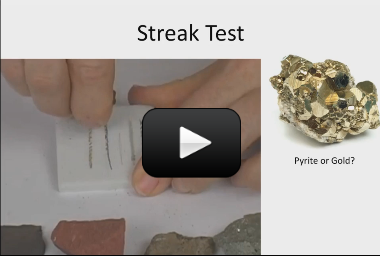
This is a recording of a recent live teleclass I did with thousands of kids from all over the world. I’ve included it here so you can participate and learn, too! Learn about the world of rocks, crystals, gems, fossils, and minerals by moving beyond just looking at pretty stones and really being able to identify, test, and classify samples and specimens you come across using techniques that real field experts use. While most people might think of a rock as being fun to climb or toss into a pond, you will now be able to see the special meaning behind the naturally occurring material that is made out of minerals by understanding how the minerals are joined together, what their crystalline structure is like, and much more.
Materials:
- Geology Field Trip in a Bag
- Worksheet printout
- Unglazed porcelain tile (or the bottom of a coffee mug)
- Paper plate or disposable pie pan
- Microscope slide
- Magnifying glass
- Cup of water
- Steel nail
- Double-sided tape
- Magnet
NEW
OLD
First Law of Thermodynamics: Energy is conserved. Energy is the ability to do work. Work is moving something against a force over a distance. Force is a push or a pull, like pulling a wagon or pushing a car. Energy cannot be created or destroyed, but can be transformed.
Materials: ball, string
Please login or register to read the rest of this content.
Click here to go to next lesson on Combustion.
A battery is a device that produces electrical energy from a chemical reaction. Another name for a battery is voltaic cell. Voltaic means to make electricity.
Most batteries contain two or more different chemical substances. The different chemical substances are usually separated from each other by a barrier. One side of the barrier is the positive terminal of the battery and the other side of the barrier is the negative terminal. When the positive and negative terminals of a battery are connected to a circuit, a chemical reaction takes place between the two different chemical substances that produces a flow of electrons (electricity).
When a battery is producing electricity, one of the chemical substances in the battery loses electrons. These electrons are then gained by the other chemical substance.
A battery is designed so that the electrons lost by one chemical substance are made to flow through a circuit, such as a flashlight lamp, before being gained by the other chemical substance. A battery will produce a flow of electrons until all of the chemical substances involved in the chemical reaction are completely used.
Please login or register to read the rest of this content.
Click here to go to next lesson on Electrochemistry Analysis
In this lab, we’re going to investigate the wonders of electrochemistry. Electrochemistry became a new branch of chemistry in 1832, founded by Michael Faraday. Michael Faraday is considered the "father of electrochemistry". The knowledge gained from his work has filtered down to this lab. YOU will be like Michael Faraday. I imagined he would have been overjoyed to do this lab and see the results. You are soooo lucky to be able to take an active part in this experiment. Here's what you're going to do...
You will be “creating” metallic copper from a solution of copper sulfate and water, and depositing it on a negative electrode. Copper is one of our more interesting elements. Copper is a metal, and element 29 on your periodic table. It conducts heat and electricity very well.
Many things around you are made of copper. Copper wire is used in electrical wiring. It has been used for centuries in the form of pipes to distribute water and other fluids in homes and in industry. The Statue of Liberty is a wonderful example of how beautiful 180,000 pounds of copper can be. Yes, it is made of copper, and no, it doesn’t look like a penny…..on the surface. The green color is copper oxide, which forms on the surface of copper exposed to air and water. The oxide is formed on the surface and does not attack the bulk of the copper. You could say that copper oxide protects the copper.
Please login or register to read the rest of this content.
You will be “creating” metallic copper from a solution of copper sulfate and water, and depositing it on a negative electrode. Copper is one of our more interesting elements. Copper is a metal, and element 29 on your periodic table. It conducts heat and electricity very well.
Many things around you are made of copper. Copper wire is used in electrical wiring. It has been used for centuries in the form of pipes to distribute water and other fluids in homes and in industry. The Statue of Liberty is a wonderful example of how beautiful 180,000 pounds of copper can be. Yes, it is made of copper, and no, it doesn’t look like a penny…..on the surface. The green color is copper oxide, which forms on the surface of copper exposed to air and water. The oxide is formed on the surface and does not attack the bulk of the copper. You could say that copper oxide protects the copper.
Please login or register to read the rest of this content.
Click here for Potassium Permanganate
Magnesium is one of the most common elements in the Earth’s crust. This alkaline earth metal is silvery white, and soft. As you perform this lab, think about why magnesium is used in emergency flares and fireworks. Farmers use it in fertilizers, pharmacists use it in laxatives and antacids, and engineers mix it with aluminum to create the BMW N52 6-cylinder magnesium engine block. Photographers used to use magnesium powder in the camera’s flash before xenon bulbs were available.
Most folks, however, equate magnesium with a burning white flame. Magnesium fires burn too hot to be extinguished using water, so most firefighters use sand or graphite.
We’re going to learn how to (safely) ignite a piece of magnesium in the first experiment, and next how to get energy from it by using it in a battery in the second experiment. Are you ready?
Please login or register to read the rest of this content.
Click here to go to next lesson on Making Copper
This experiment shows how a battery works using electrochemistry. The copper electrons are chemically reacting with the lemon juice, which is a weak acid, to form copper ions (cathode, or positive electrode) and bubbles of hydrogen.
These copper ions interact with the zinc electrode (negative electrode, or anode) to form zinc ions. The difference in electrical charge (potential) on these two plates causes a voltage.
Materials:
- one zinc and copper strip
- two alligator wires
- digital multimeter
- one fresh large lemon or other fruit
Please login or register to read the rest of this content.
Click here to go to next lesson on Magnesium Battery
Mars is coated with iron oxide, which not only covers the surface but is also present in the rocks made by the volcanoes on Mars.
Today you get to perform a chemistry experiment that investigates the different kinds of rust and shows that given the right conditions, anything containing iron will eventually break down and corrode. When iron rusts, it’s actually going through a chemical reaction: Steel (iron) + Water (oxygen) + Air (oxygen) = Rust
Materials
- Four empty water bottles
- Four balloons
- Water
- Steel wool
- Vinegar
- Water
- Salt
Please login or register to read the rest of this content.
Click here to go to next lesson on Fruit Battery
Never polish your tarnished silver-plated silverware again! Instead, set up a ‘silverware carwash’ where you earn a nickel for every piece you clean. (Just don’t let grandma in on your little secret!)
We’ll be using chemistry and electricity together (electrochemistry) to make a battery that reverses the chemical reaction that puts tarnish on grandma’s good silver. It’s safe, simple, and just needs a grown-up to help with the stove.
Please login or register to read the rest of this content.
Click here to go to next lesson on Batteries storing energy
If you don’t have equipment lying around for this experiment, wait until you complete Unit 10 (Electricity) and then come back to complete this experiment. It’s definitely worth it!
Electroplating was first figured out by Michael Faraday. The copper dissolves and shoots over to the key and gets stuck as a thin layer onto the metal key. During this process, hydrogen bubbles up and is released as a gas. People use this technique to add material to undersized parts, for place a protective layer of material on objects, to add aesthetic qualities to an object.
Materials:
- one shiny metal key
- 2 alligator clips
- 9V battery clip
- copper sulfate (MSDS)
- one copper strip or shiny copper penny
- one empty pickle jar
- 9V battery
Please login or register to read the rest of this content.
Click here to go to next lesson on Electrochemical cells and voltage
This experiment is just for advanced students. If you guessed that this has to do with electricity and chemistry, you’re right! But you might wonder how they work together. Back in 1800, William Nicholson and Johann Ritter were the first ones to split water into hydrogen and oxygen using electrolysis. (Soon afterward, Ritter went on to figure out electroplating.) They added energy in the form of an electric current into a cup of water and captured the bubbles forming into two separate cups, one for hydrogen and other for oxygen.
This experiment is not an easy one, so feel free to skip it if you need to. You don’t need to do this to get the concepts of this lesson but it’s such a neat and classical experiment (my students love it) so you can give it a try if you want to. The reason I like this is because what you are really doing in this experiment is ripping molecules apart and then later crashing them back together.
Have fun and please follow the directions carefully. This could be dangerous if you’re not careful. The image shown here is using graphite from two pencils sharpened on both ends, but the instructions below use wire. Feel free to try both to see which types of electrodes provide the best results.
Please login or register to read the rest of this content.
Click here to go to next lesson on Electroplating
Electricity. Chemistry. Nothing in common, have nothing to do with each other. Wrong! Electrochemistry has been a fact since 1774. Once electricity was applied to particular solutions, changes occurred that scientists of the time did not expect.
In this lab, we will discover some of the same things that Farraday found over 300 years ago. We will be there as things tear apart, particles rush about, and the power of attraction is very strong. We’re not talking about dancing, we’re talking about something much more important and interesting….we’re talking about ELECTROCHEMISTRY!
Please login or register to read the rest of this content.
Click here to go to next lesson on Electrolysis
If you guessed that electrochemistry has to do with electricity and chemistry, you’re right! But you might wonder how they work together. Back in 1800, William Nicholson and Johann Ritter were the first ones to split water into hydrogen and oxygen using electrolysis. (Soon afterwards, Ritter went on to figure out electroplating.) They added energy in the form of an electric current into a cup of water and captured the bubbles forming into two separate cups, one for hydrogen and other for oxygen.
Please login or register to read the rest of this content.
Click here to go to next lesson on More on Electrochemistry
This is a cool video from a Teacher’s Educational Channel in Europe I thought you might enjoy about the science of fireworks:
You can view the full video here.
Click here to go to your next lesson in Electrochemistry.
Charcoal crystals uses evaporation to grow the crystals, which will continue to grow for weeks afterward. You’ll need a piece of very porous material, such as a charcoal briquette, sponge, or similar object to absorb the solution and grow your crystals as the liquid evaporates. These crystals are NOT for eating, so be sure to keep your growing garden away from young children and pets! This project is exclusively for advanced students, as it more involves toxic chemicals than just salt and sugar.
Click here to go to next lesson on Science of Fireworks
Potassium perchlorate is usually safer than chlorate salt, but it sometimes is hard to get it. In the past, the only supplier in the US makes ammonium perchlorate, the oxidizer that was used with the space shuttle booster rockets, and each shuttle launch required 1.5 million pounds of it, which was twice the annual consumption rate, so when there were a lot of shuttle launches, the fireworks market took a hit and it was near impossible to get any potassium perchlorate.
Please login or register to read the rest of this content.
Click here to go to next lesson on Charcoal Crystals
Second Law of Thermodynamics: Heat flows from hot to cold. Heat is the movement of thermal energy from one object to another. Heat can only flow from an object of a higher temperature to an object of a lower temperature. Heat can be transferred from one object to another through conduction, convection and radiation.
Temperature is basically a speedometer for molecules. The faster they are wiggling and jiggling, the higher the temperature and the higher the thermal energy that object has. Your skin, mouth and tongue are antennas which can sense thermal energy. When an object absorbs heat it does not necessarily change temperature.
Materials: hot cup of cocoa
Please login or register to read the rest of this content.
Click here to go to next lesson on Fireworks
First Law of Thermodynamics: Energy is conserved. Energy is the ability to do work. Work is moving something against a force over a distance. Force is a push or a pull, like pulling a wagon or pushing a car. Energy cannot be created or destroyed, but can be transformed.
Materials: ball, string
Please login or register to read the rest of this content.
Click here to go to next lesson on Thermodynamics: Second law
What do you do if you don’t know the concentration of a solution? We use a method called titration to determine how many moles are present in the solution of an acid or a base by neutralizing it. A titration curve is when you graph out the pH as you drop it in the solution.
Please login or register to read the rest of this content.
Click here to go to next lesson on pH and solubility
This experiment is for advanced students. All chemical reactions are equilibrium reactions. This experiment is really cool because you’re going to watch how a chemical reaction resists a pH change.
Please login or register to read the rest of this content.
Click here to go to next lesson on Titrations and pH curves