
 Sound is everywhere. It can travel through solids, liquids, and gases, but it does so at different speeds. It can rustle through trees at 770 MPH (miles per hour), echo through the ocean at 3,270 MPH, and resonate through solid rock at 8,600 MPH.
Sound is made by things vibrating back and forth, whether it’s a guitar string, drum head, or clarinet. The back and forth motion of an object (like the drum head) creates a sound wave in the air that looks a lot like a ripple in a pond after you throw a rock in. It radiates outward, vibrating it’s neighboring air molecules until they are moving around, too. This chain reaction keeps happening until it reaches your ears, where your “sound detectors” pick up the vibration and works with your brain to turn it into sound.
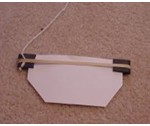
You can illustrate this principle using a guitar string – when you pluck the string, your ears pick up a sound. If you have extra rubber bands, wrap them around an open shoebox to make a shoebox guitar. You can also cut a hole in the lid (image left) and use wooden pencils to lift the rubber band off the surface of the shoebox.
Please login or register to read the rest of this content.
Great observation! The rubber bands probably sounded the same at first because they had the same length and tension, causing them to vibrate at the same frequency. Small changes in stretching and tightness can make them vibrate differently and create different notes.
Hi, I made the shoebox guitar listed at the top of this experiment , the day it was made the rubberbands – some of them had the same sound. Why is that? Today we we have six strings that all look the same (one more than before) and today they soud like a scale with different sounds. We even tried playing it with chopsticks and pencils. This one is a lot of fun.